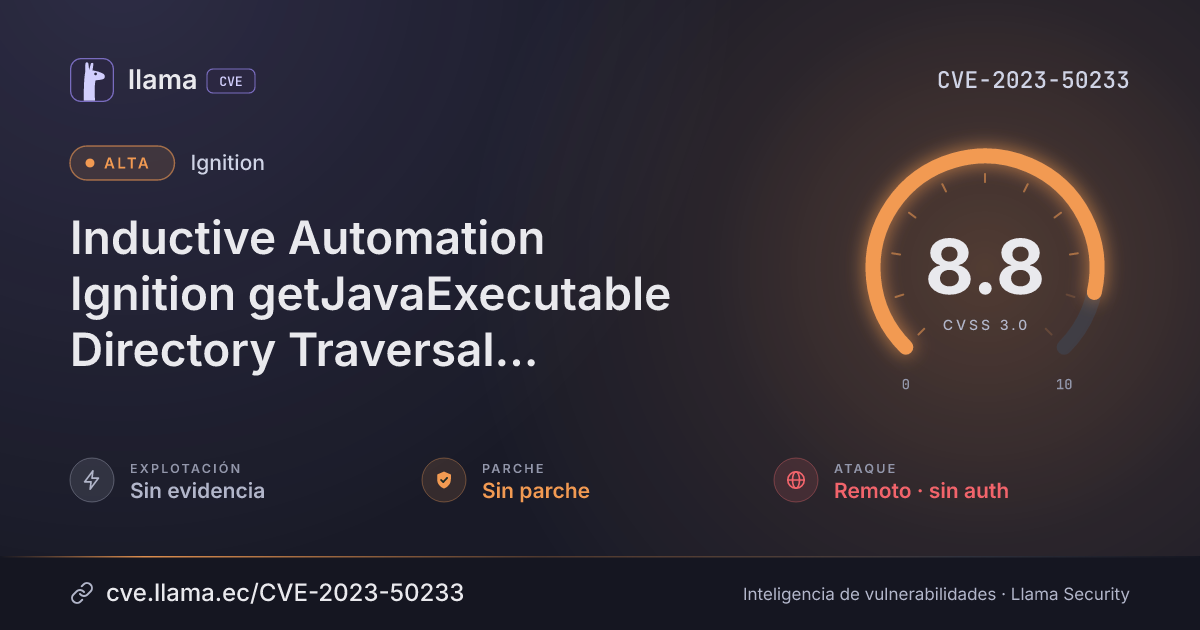
CVE-2023-50233
Inductive Automation Ignition getJavaExecutable Directory Traversal Remote Code Execution Vulnerability
CVSS:3.0/AV:N/AC:L/PR:N/UI:R/S:U/C:H/I:H/A:H
Fuente: CNA
Ciclo de vida de la vulnerabilidad
| Fecha | Fase | Evento | Detalle |
|---|---|---|---|
| Divulgación | Publicada | CVE-2023-50233 divulgada · CVSS 8.8 (CNA) | |
| Divulgación | Evaluación SSVC | CISA-ADP · explotación ninguna | |
| Divulgación | Modificada | Última actualización del registro | |
| Monitoreo | Detectada | Ingresó al índice |
Inductive Automation Ignition getJavaExecutable Directory Traversal Remote Code Execution Vulnerability. This vulnerability allows remote attackers to execute arbitrary code on affected installations of Inductive Automation Ignition. User interaction is required to exploit this vulnerability in that the target must connect to a malicious server. The specific flaw exists within the getJavaExecutable method. The issue results from the lack of proper validation of a user-supplied path prior to using it in file operations. An attacker can leverage this vulnerability to execute code in the context of the current user. Was ZDI-CAN-22029.
Desglose de métricas
Versiones afectadas
8.1.31Estado del parche por paquete
| Paquete / producto | Estado | Corregida en | Desde divulgación | Última versión |
|---|---|---|---|---|
Ignition |
Sin parche | — | — | — |
Arsenal público
Sin exploits, módulos ni PoC públicos conocidos a la fecha de verificación.
https://security.inductiveautomation.com/?tcuUid=fc4c4515-046d-4365-b688-693337449c5bhttps://www.zerodayinitiative.com/advisories/ZDI-24-185/Las referencias externas se muestran para copiar: cve.llama.ec no lo redirige a otros sitios.