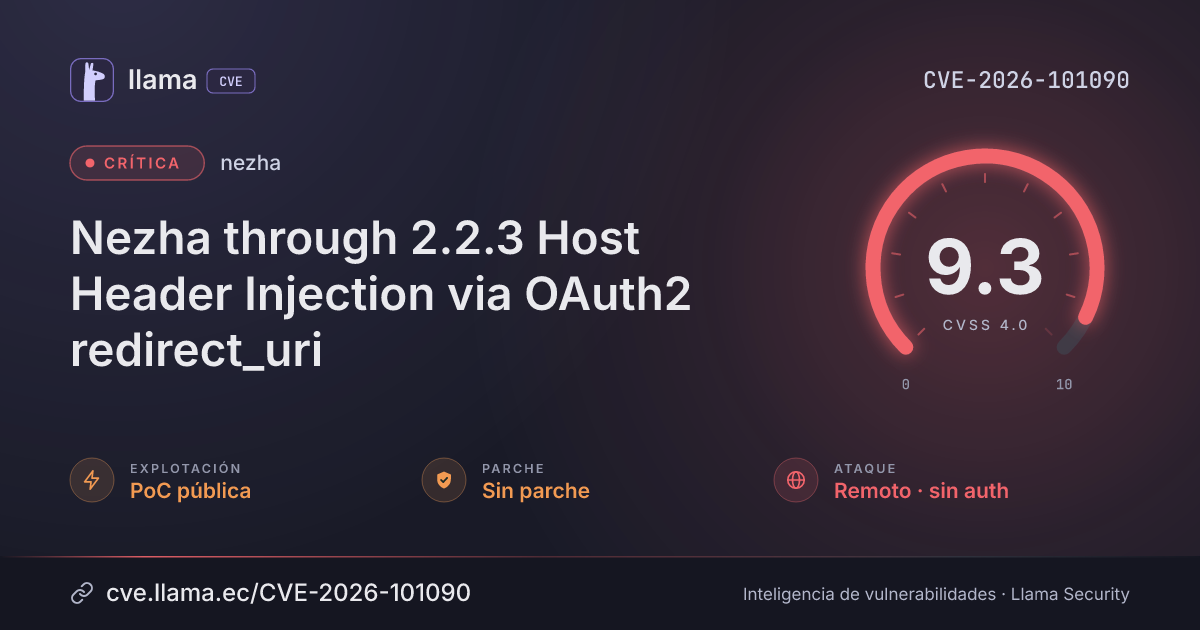
CVE-2026-101090
Nezha through 2.2.3 Host Header Injection via OAuth2 redirect_uri
CVSS:4.0/AV:N/AC:L/AT:N/PR:N/UI:N/VC:H/VI:H/VA:H/SC:N/SI:N/SA:N
Fuente: CNA
Ciclo de vida de la vulnerabilidad
| Fecha | Fase | Evento | Detalle |
|---|---|---|---|
| Divulgación | Publicada | CVE-2026-101090 divulgada · CVSS 9.3 (CNA) | |
| Divulgación | Evaluación SSVC | CISA-ADP · explotación PoC pública | |
| Divulgación | Modificada | Última actualización del registro | |
| Monitoreo | Detectada | Ingresó al índice | |
| Monitoreo | Verificada | Última verificación contra las fuentes |
Nezha 2.2.3 contains a Host header injection regression in the OAuth2 redirect endpoint. When the new optional dashboard_host setting is empty, /api/v1/oauth2/{provider} (cmd/dashboard/controller/oauth2.go) reflects the attacker-supplied HTTP Host header into the redirect_uri sent to the identity provider instead of falling back to the configured install_host. An attacker who induces a victim to begin OAuth2 login via a request that reaches Nezha with a forged Host header can cause an attacker-controlled callback URL to be used as the redirect_uri; if the OAuth2 provider accepts it, the victim's authorization code is delivered to the attacker origin, allowing the attacker to complete the OAuth2 login/binding flow and take over the account. This regresses the fix for GHSA-9rc6-8cjv-rcvx and is configuration-dependent (dashboard_host empty). At the time of the advisory no patched version was available.
Desglose de métricas
Rangos afectados
Estado del parche por paquete
| Paquete / producto | Estado | Corregida en | Desde divulgación | Última versión |
|---|---|---|---|---|
gogithub.com/nezhahq/nezha |
Sin parche | — | — | v1.14.14 afectada |
Arsenal público
Sin exploits, módulos ni PoC públicos conocidos a la fecha de verificación.
https://github.com/nezhahq/nezha/security/advisories/GHSA-rf68-8gjr-36q7https://www.vulncheck.com/advisories/nezha-through-2.2.3-host-header-injection-via-oauth2-redirect-uriLas referencias externas se muestran para copiar: cve.llama.ec no lo redirige a otros sitios.