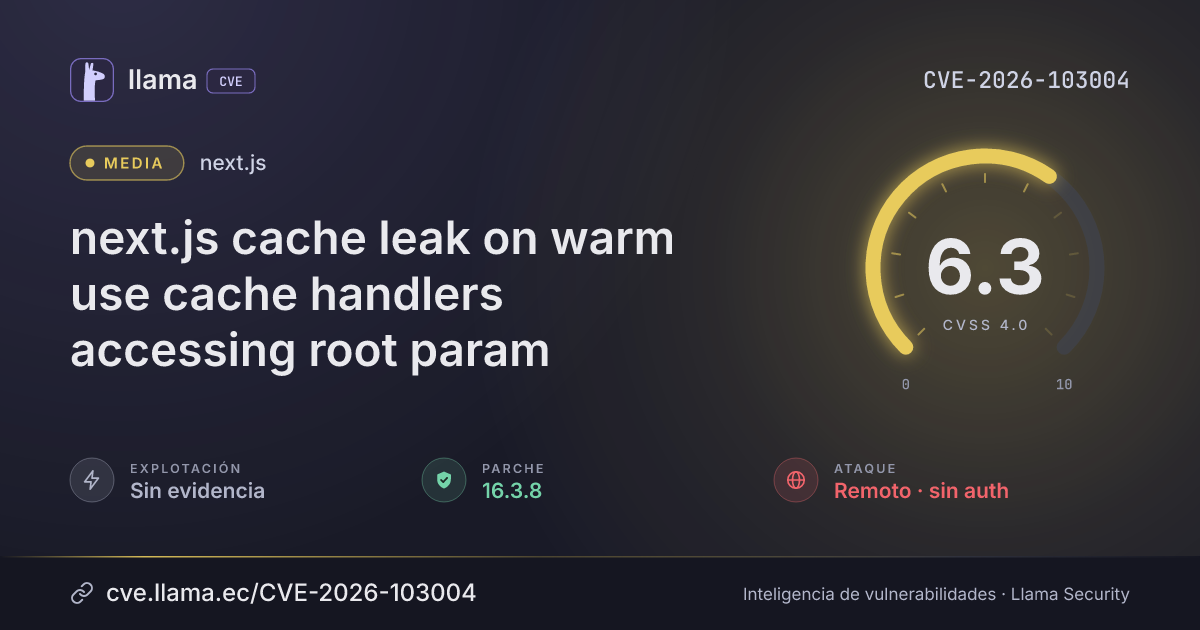
CVE-2026-103004
next.js cache leak on warm use cache handlers accessing root param
CVSS:4.0/AV:N/AC:L/AT:P/PR:N/UI:N/VC:L/VI:N/VA:N/SC:N/SI:N/SA:N
Fuente: CNA
Ciclo de vida de la vulnerabilidad
| Fecha | Fase | Evento | Detalle |
|---|---|---|---|
| Remediación | Parche 16.3.8 | next · -1 d desde divulgación | |
| Divulgación | Publicada | CVE-2026-103004 divulgada · CVSS 6.3 (CNA) | |
| Divulgación | Evaluación SSVC | CISA-ADP · explotación ninguna | |
| Divulgación | Modificada | Última actualización del registro | |
| Monitoreo | Detectada | Ingresó al índice | |
| Monitoreo | Verificada | Última verificación contra las fuentes |
Next.js versions from 16.3.0 to 16.3.7 warm `use cache` handlers using `next/root-params` and can leak their return value to pages with different root params. With Cache Components enabled (cacheComponents: true), a 'use cache' function that calls another 'use cache' function that reads a root param can be keyed incorrectly when the inner call is served from an existing entry: the enclosing function's cache key then omits that root param. The enclosing entry is written once and reused for all root param values, so a response for one root param value can serve content produced for a different value — whether the page is prerendered at build time or at runtime, or rendered dynamically. Shared cache headers let downstream caches redistribute the content further. What values are leaked cannot be attacker controlled. Which value's content is served depends only on which invocation wrote the entry first. This has been patched in 16.3.8.
Desglose de métricas
Rangos afectados
Estado del parche por paquete
| Paquete / producto | Estado | Corregida en | Desde divulgación | Última versión |
|---|---|---|---|---|
npmnext |
Corregida | 16.3.8 | -1 d | 16.4.6 no afectada |
16.3.8Arsenal público
Sin exploits, módulos ni PoC públicos conocidos a la fecha de verificación.
https://github.com/vercel/next.js/security/advisories/GHSA-h694-7cp9-m8p3https://github.com/vercel/next.js/releases/tag/v16.3.8Las referencias externas se muestran para copiar: cve.llama.ec no lo redirige a otros sitios.