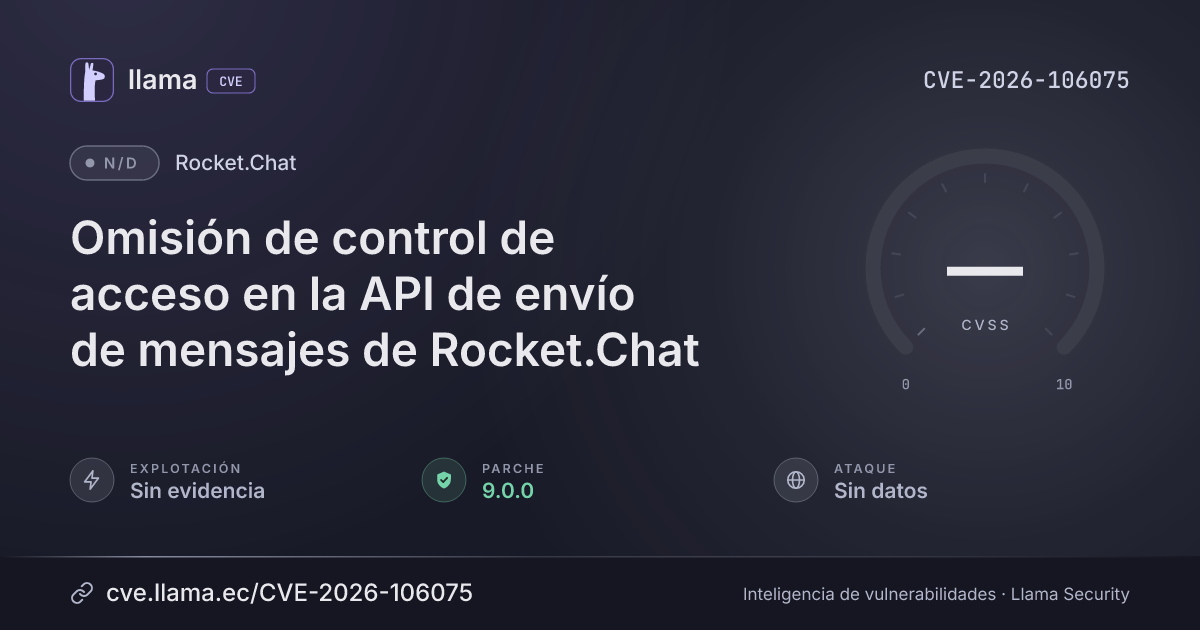
CVE-2026-106075
Rocket.Chat access control bypass in message-sending API
Authenticated users can add hidden message fields to deny service in rooms, store HTML, or spoof authors.
Texto original en inglés · Ver en español
Ciclo de vida de la vulnerabilidad
| Fecha | Fase | Evento | Detalle |
|---|---|---|---|
| Divulgación | Publicada | CVE-2026-106075 divulgada | |
| Monitoreo | Detectada | Ingresó al índice | |
| Monitoreo | Fuente: NIST NVD | Registro visto por primera vez en NIST NVD | |
| Monitoreo | Verificada | Última verificación contra las fuentes |
Rocket.Chat is affected through its message-sending API endpoint, which fails to properly check nested message fields. An authenticated user with standard privileges can inject extra message metadata that the server and clients then trust, enabling effects such as persistent denial of service in a room, stored HTML/iframe injection, changes to other users' starred messages, and spoofed attribution for pinned or edited messages.
Descripción original del registro (hackerone)
Rocket.Chat's POST /api/v1/chat.sendMessage endpoint improperly validates nested message properties, allowing authenticated users with standard privileges to inject arbitrary message metadata that is persisted and trusted by the server and clients. This can lead to persistent room-level denial of service, stored HTML/iframe injection, unauthorized modification of other users' private starred messages, permission bypass and attribution spoofing for pinned messages, forged edit attribution, and invisible user mentions.
Rangos afectados
Estado del parche por paquete
| Paquete / producto | Estado | Corregida en | Desde divulgación | Última versión |
|---|---|---|---|---|
Rocket.Chat |
Corregida | 9.0.0 | — | — |
9.0.0Arsenal público
Sin exploits, módulos ni PoC públicos conocidos a la fecha de verificación.
https://hackerone.com/reports/4059370Las referencias externas se muestran para copiar: cve.llama.ec no lo redirige a otros sitios.