llamaCVEVulnerability Intelligence
/
@fastify/reply-from

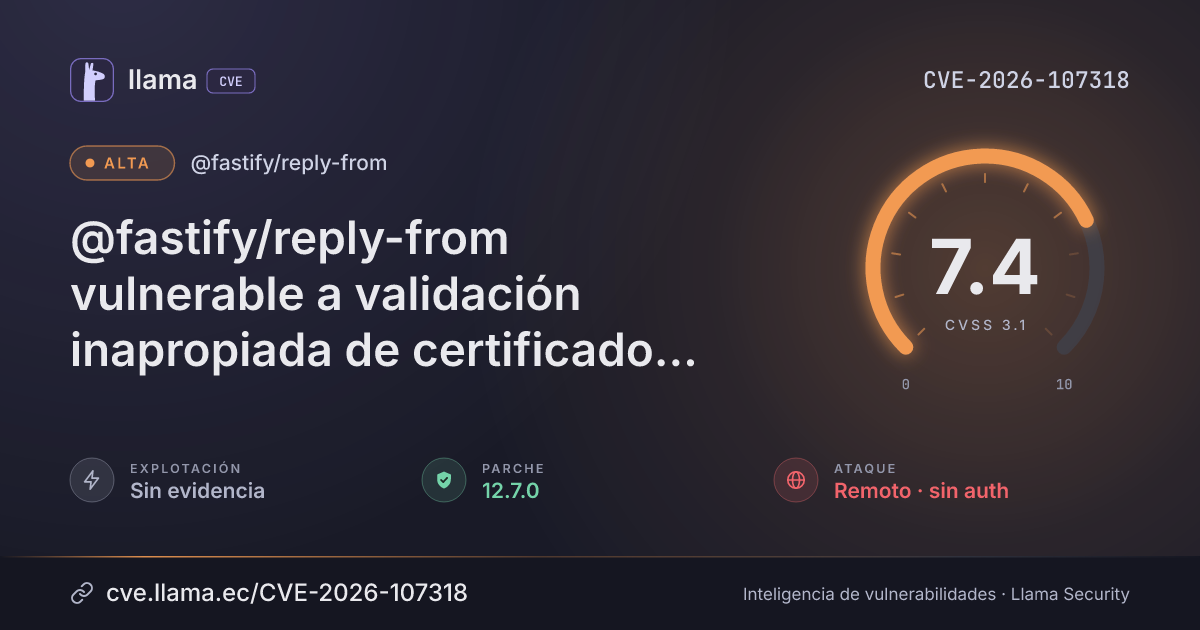
CVE-2026-107318

@fastify/reply-from vulnerable to improper certificate validation in built-in HTTPS transports

Texto original en inglés · Ver en español

Afecta la configuración por defectoParche disponible
Descargar PNG JSON
CVSS 3.1
7.4
Alta
CVSS:3.1/AV:N/AC:H/PR:N/UI:N/S:U/C:H/I:H/A:N Fuente: CNA
ExplotaciónSin evidenciaSSVC: ninguna · no figura en CISA KEV
Exploits públicos0Ninguno conocido
Parche1 versiónPrimer parche el mismo día de la divulgación
Exposición44 dDesde la divulgación, 8 oct 2026, 3:32 p. m.
Detección14 dDesde la divulgación hasta su ingreso al índice
Decisión SSVCSeguir de cerca
Monitorear y programar la remediación
Sin explotación conocida, no automatizable e impacto técnico total. Hay versiones corregidas disponibles.
Si sale un exploit, la subo de categoría. Atento.Yo la vigilo, tú la programas. ¿Trato?
Timeline

Ciclo de vida de la vulnerabilidad

Hoy
Divulgación
Publicada
Evaluación SSVC +1
Explotación
Remediación
Parche 12.7.0
Monitoreo
Detectada
Fuente: OSV
Verificada
8 oct 26
9 oct 26
22 oct 26
24 oct 26
18 nov 26
21 nov 26
8 oct 26
19 oct 26
30 oct 26
10 nov 26
21 nov 26
FechaFaseEventoDetalle
Divulgación Publicada CVE-2026-107318 divulgada · CVSS 7.4 (CNA)
Remediación Parche 12.7.0 @fastify/reply-from · 0 d desde divulgación
Divulgación Evaluación SSVC CISA-ADP · explotación ninguna
Divulgación Modificada Última actualización del registro
Monitoreo Detectada Ingresó al índice
Monitoreo Fuente: OSV Registro visto por primera vez en OSV
Monitoreo Verificada Última verificación contra las fuentes
Resumen

@fastify/reply-from is a Fastify plugin that forwards requests to an upstream HTTP or HTTPS server. In versions prior to 12.7.0, all of the built-in HTTPS transports override the secure default and set rejectUnauthorized to false, so the proxy does not verify the TLS certificate of the upstream even when the application points it at an https upstream in the default configuration. An on-path network attacker can therefore impersonate the configured HTTPS upstream, read the credentials and request bodies the proxy forwards, and return forged responses that the application trusts. The issue is fixed in @fastify/reply-from 12.7.0, and users should upgrade to 12.7.0 or later. As a workaround, pass an explicit rejectUnauthorized true on the transport, supply an already configured undici instance, or use the undici global agent.

Affects @fastify/reply-from before 12.7.0 when proxying to an https:// upstream with no explicit TLS option, or with partial or empty tls objects. Fixed in 12.7.0.

¿Qué significa?A proxy configured with only an https:// base and no explicit TLS option does not authenticate the upstream certificate. An on-path attacker can impersonate the upstream, read forwarded requests including Authorization headers and bodies, and return a forged response.
¿Quién está afectado?Versions before 12.7.0 are affected. The issue covers a proxy with an https:// upstream base and no explicit TLS option, partial TLS option objects such as { connections: 10 } or an empty tls: {} on the transport, and the http path with undici: false and globalAgent: true. To check a setup, look at the upstream base and the tls option in the transport configuration, and check the installed version with npm ls @fastify/reply-from.
¿Qué hacer?Upgrade @fastify/reply-from to 12.7.0 or later, which is the fixed version listed for this vulnerability.
Contexto

Condiciones y alcance

Condiciones necesarias para que el fallo sea explotable
01
Proxy configured with an https:// upstream base and no explicit TLS option“A proxy configured with only an https:// base, and no explicit TLS option, does not authenticate the upstream certificate”
02
Partial TLS option objects, or an empty tls object, on the transport“partial option objects such as { connections: 10 } or an empty tls: {} were also affected”
03
http path with undici disabled and globalAgent enabled“as was the http path under undici: false, globalAgent: true”
¿Quién debe revisar?Teams running @fastify/reply-from before 12.7.0 that proxy to https:// upstreams, including partial tls options or undici:false with globalAgent
Vector CVSS 3.1

Desglose de métricas

Opción resaltada = valor del vector · izquierda = peor caso · CNA
Vector de ataqueAV:N
RedAdyacenteLocalFísica
ComplejidadAC:H
BajaAlta
PrivilegiosPR:N
NingunoBajosAltos
InteracciónUI:N
NingunaRequerida
AlcanceS:U
CambiadoSin cambio
ConfidencialidadC:H
AltoBajoNinguno
IntegridadI:H
AltoBajoNinguno
DisponibilidadA:N
AltoBajoNinguno
Score de explotaciónQué tan fácil y probable es que la exploten
7.1/ 10Alto
Vector 7.1 (fácil) · sin evidencia de explotación.
Versiones

Rangos afectados

Afectada Corregida Última
@fastify/reply-from< 12.7.0
12.7.0
12.8.2
Remediación

Estado del parche por paquete

Paquete / productoEstadoCorregida enDesde divulgaciónÚltima versión
npm@fastify/reply-from
Corregida 12.7.0 0 d 12.8.2 no afectada
Versiones corregidas12.7.0
Explotación

Arsenal público

Sin exploits, módulos ni PoC públicos conocidos a la fecha de verificación.

Referencias
Fabricantehttps://github.com/fastify/fastify-reply-from/security/advisories/GHSA-j425-jw94-m29r
Otrahttps://cna.openjsf.org/security-advisories.html

Las referencias externas se muestran para copiar: cve.llama.ec no lo redirige a otros sitios.