llamaCVEVulnerability Intelligence
/
Tribulant Newsletters

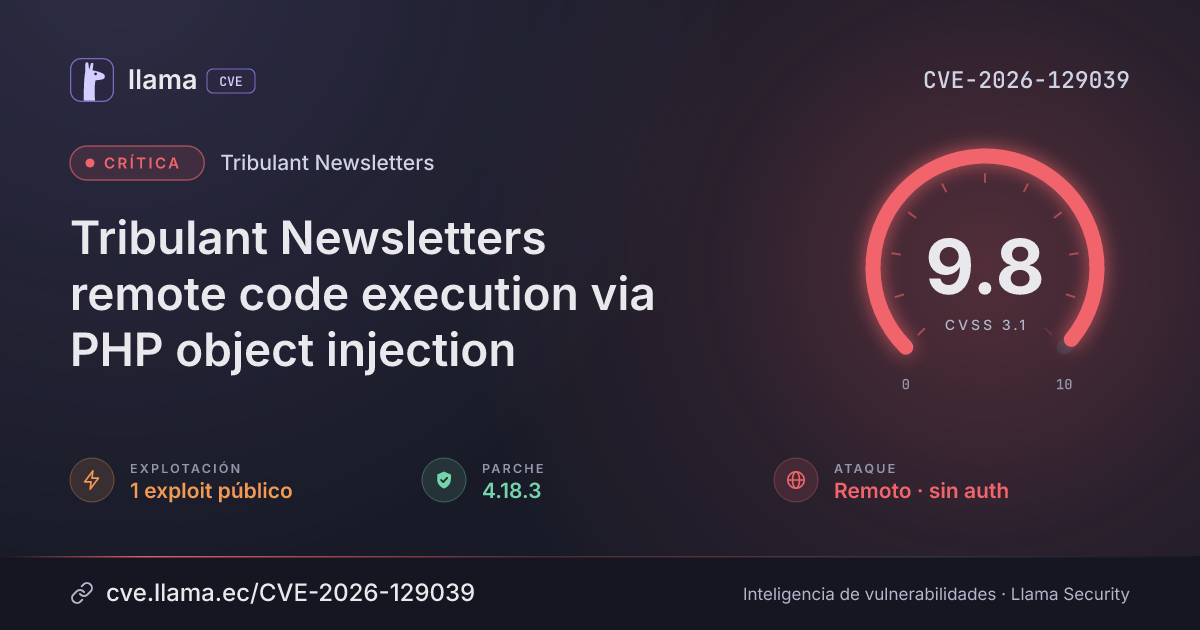
CVE-2026-129039

Tribulant Newsletters remote code execution via PHP object injection

Remote, unauthenticated attackers can run code or take over the site by sending crafted serialized data.

Texto original en inglés · Ver en español

UnclearParche disponibleunsafe deserialization
Descargar PNG JSON
CVSS 3.1
9.8
Crítica
CVSS:3.1/AV:N/AC:L/PR:N/UI:N/S:U/C:H/I:H/A:H Fuente: CNA
ExplotaciónSin evidenciaSSVC: ninguna · no figura en CISA KEV
Exploits públicos0Ninguno conocido
Parche1 versión4.18.3
Exposición1 dDesde la divulgación, 20 nov 2026, 9:00 a. m.
Detección14 minDesde la divulgación hasta su ingreso al índice
Decisión SSVCAtender
Priorizar en el próximo ciclo de cambios
Sin explotación conocida, automatizable e impacto técnico total. Hay versiones corregidas disponibles.
Inventaria, prioriza y ponle fecha. Esta semana.Huele a exploit funcional. Y yo de olores sé.
Timeline

Ciclo de vida de la vulnerabilidad

Hoy
Divulgación
Publicada
Evaluación SSVC +1
Explotación
Remediación
Monitoreo
Detectada +1
Verificada
09:00 a. m.
02:25 p. m.
04:16 p. m.
09:00 a. m.
04:49 p. m.
12:38 a. m.
08:27 a. m.
04:16 p. m.
FechaFaseEventoDetalle
Divulgación Publicada CVE-2026-129039 divulgada · CVSS 9.8 (CNA)
Monitoreo Detectada Ingresó al índice
Monitoreo Fuente: NIST NVD Registro visto por primera vez en NIST NVD
Divulgación Evaluación SSVC CISA-ADP · explotación ninguna
Divulgación Modificada Última actualización del registro
Monitoreo Verificada Última verificación contra las fuentes
Resumen
Resumen generado por IA · CC-BY 4.0 · 20 nov 2026

The Newsletters plugin for WordPress, published by Tribulant Software, contains a PHP object injection flaw caused by unsafe handling of serialized data. It can be reached remotely, without logging in, and an attacker who exploits it could potentially run code or otherwise take over the affected site.

¿Qué significa?The plugin does not safely handle serialized data it processes, so an attacker can manipulate how the site processes data to run harmful actions on the server.
¿Quién está afectado?Tribulant Software's Newsletters plugin for WordPress, version 4.18.2 and earlier, is affected. To check, look at the plugin version shown on the WordPress Plugins screen or in the plugin's readme file.
¿Qué hacer?Update the Newsletters plugin to version 4.18.3 or later, which is the listed fixed version.
Descripción original del registro (Patchstack)

Deserialization of Untrusted Data vulnerability in Tribulant Software Newsletters newsletters-lite allows Object Injection.This issue affects Newsletters: from n/a through 4.18.2.

Contexto

Condiciones y alcance

Condiciones necesarias para que el fallo sea explotable
01
Tribulant Software Newsletters plugin version 4.18.2 or earlier (vulnerable versions <= 4.18.2)“Vulnerable version(s)”
Vector CVSS 3.1

Desglose de métricas

Opción resaltada = valor del vector · izquierda = peor caso · CNA
Vector de ataqueAV:N
RedAdyacenteLocalFísica
ComplejidadAC:L
BajaAlta
PrivilegiosPR:N
NingunoBajosAltos
InteracciónUI:N
NingunaRequerida
AlcanceS:U
CambiadoSin cambio
ConfidencialidadC:H
AltoBajoNinguno
IntegridadI:H
AltoBajoNinguno
DisponibilidadA:H
AltoBajoNinguno
Score de explotaciónQué tan fácil y probable es que la exploten
10.0/ 10Muy alto
Vector 10.0 (muy fácil) · sin evidencia de explotación.
Versiones

Rangos afectados

Afectada Corregida
newsletters-lite< 4.18.3 ≤ 4.18.2
4.18.2
4.18.3
Remediación

Estado del parche por paquete

Paquete / productoEstadoCorregida enDesde divulgaciónÚltima versión
Newsletters
Corregida 4.18.3 — —
Versiones corregidas4.18.3
Explotación

Arsenal público

Sin exploits, módulos ni PoC públicos conocidos a la fecha de verificación.

Registro
EscenarioGENERALPatchstack
solutionUpdate the WordPress Newsletters plugin to the latest available version (at least 4.18.3).Patchstack
Referencias
Otrahttps://patchstack.com/database/wordpress/plugin/newsletters-lite/vulnerability/wordpress-newsletters-plugin-4-18-2-php-object-injection-vulnerability-2?_s_id=cve

Las referencias externas se muestran para copiar: cve.llama.ec no lo redirige a otros sitios.