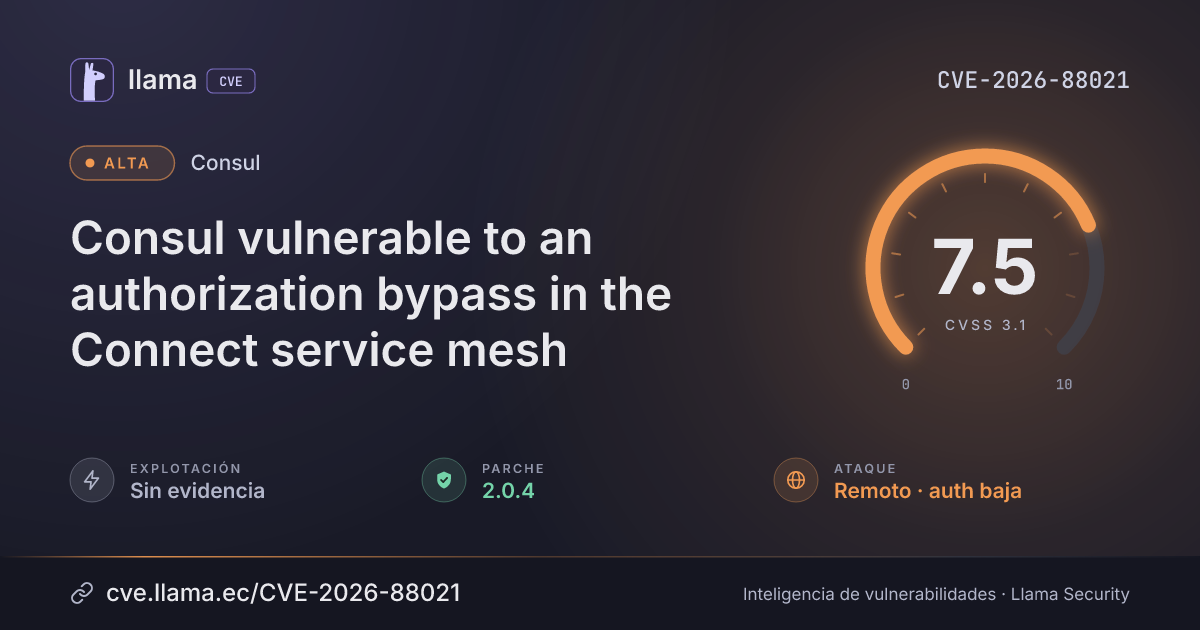
CVE-2026-88021
Consul vulnerable to an authorization bypass in the Connect service mesh
CVSS:3.1/AV:N/AC:L/PR:L/UI:N/S:U/C:H/I:L/A:N
Fuente: CNA
Ciclo de vida de la vulnerabilidad
| Fecha | Fase | Evento | Detalle |
|---|---|---|---|
| Divulgación | Publicada | CVE-2026-88021 divulgada · CVSS 7.5 (CNA) | |
| Divulgación | Evaluación SSVC | CISA-ADP · explotación ninguna | |
| Divulgación | Modificada | Última actualización del registro | |
| Monitoreo | Detectada | Ingresó al índice |
Consul and Consul Enterprise are vulnerable to an authorization bypass in the Connect service mesh that may allow a service to reach a destination it is not authorized to access. When building Envoy RBAC rules to enforce Connect intentions, Consul did not correctly escape certain characters in service names, namespaces, and partitions, causing the generated authorization rules to match more broadly than intended. This vulnerability (CVE-2026-88021) is fixed in Consul 2.0.4 and Consul Enterprise 1.21.18, 1.22.12 and 2.0.4.
Desglose de métricas
Rangos afectados
Estado del parche por paquete
| Paquete / producto | Estado | Corregida en | Desde divulgación | Última versión |
|---|---|---|---|---|
Consul |
Corregida | 2.0.4 | — | — |
2.0.4Arsenal público
Sin exploits, módulos ni PoC públicos conocidos a la fecha de verificación.
https://discuss.hashicorp.com/t/hcsec-2026-37-consul-vulnerable-to-an-authorization-bypass-in-the-connect-service-mesh/77739Las referencias externas se muestran para copiar: cve.llama.ec no lo redirige a otros sitios.