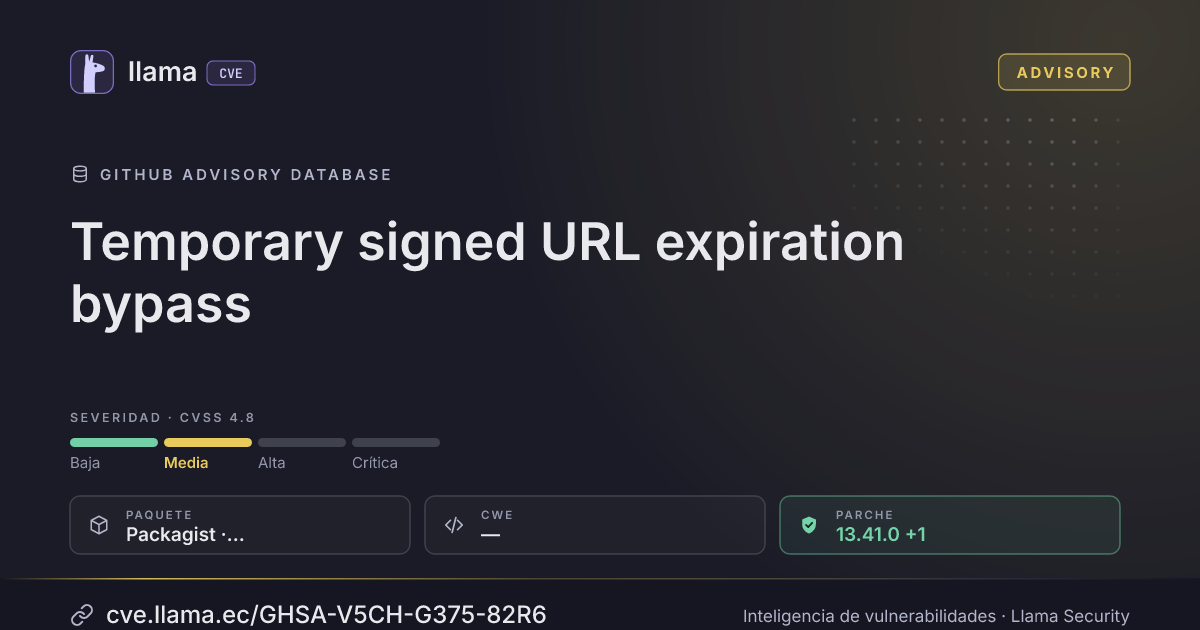
GHSA-V5CH-G375-82R6
Temporary signed URL expiration bypass
CVSS:3.1/AV:N/AC:H/PR:N/UI:N/S:U/C:L/I:L/A:N
Fuente: GitHub
Ciclo de vida de la vulnerabilidad
| Fecha | Fase | Evento | Detalle |
|---|---|---|---|
| Divulgación | Publicada | GHSA-V5CH-G375-82R6 divulgada · CVSS 4.8 (GitHub) | |
| Monitoreo | Detectada | Ingresó al índice | |
| Monitoreo | Verificada | Última verificación contra las fuentes |
Impact
When PHP's `max_input_vars` limit causes the `expires` query parameter to be dropped from the parsed query, Laravel's signed URL validation can still verify the signature against the raw query string. `signatureHasNotExpired()` then treats the URL as non-expiring, so an expired temporary signed URL may be accepted. Exploitation requires a request line long enough to exceed `max_input_vars`, which depends on server and proxy limits.
Patches
This issue has been patched in Laravel 12.72.0 and 13.41.0: https://github.com/laravel/framework/pull/62349. Users should upgrade to one of these versions or later.
Workarounds
- Limit URL length at the web server. Default nginx and Apache settings already reject the long URL the attack needs.
- If web server configuration is unavailable, add a middleware ahead of `signed` that returns an error when the raw query has more pairs than `max_input_vars` or when `expires` appears in the raw query but is missing from the parsed one.
Incluye detalles técnicos publicados por el investigador. Úselos solo para validar y corregir sus propios sistemas.
Desglose de métricas
Rangos afectados
Estado del parche por paquete
| Paquete / producto | Estado | Corregida en | Desde divulgación | Última versión |
|---|---|---|---|---|
Packagistlaravel/framework |
Corregida | 12.72.0, 13.41.0 | — | — |
12.72.013.41.0Arsenal público
Sin exploits, módulos ni PoC públicos conocidos a la fecha de verificación.
https://github.com/laravel/framework/security/advisories/GHSA-v5ch-g375-82r6Las referencias externas se muestran para copiar: cve.llama.ec no lo redirige a otros sitios.