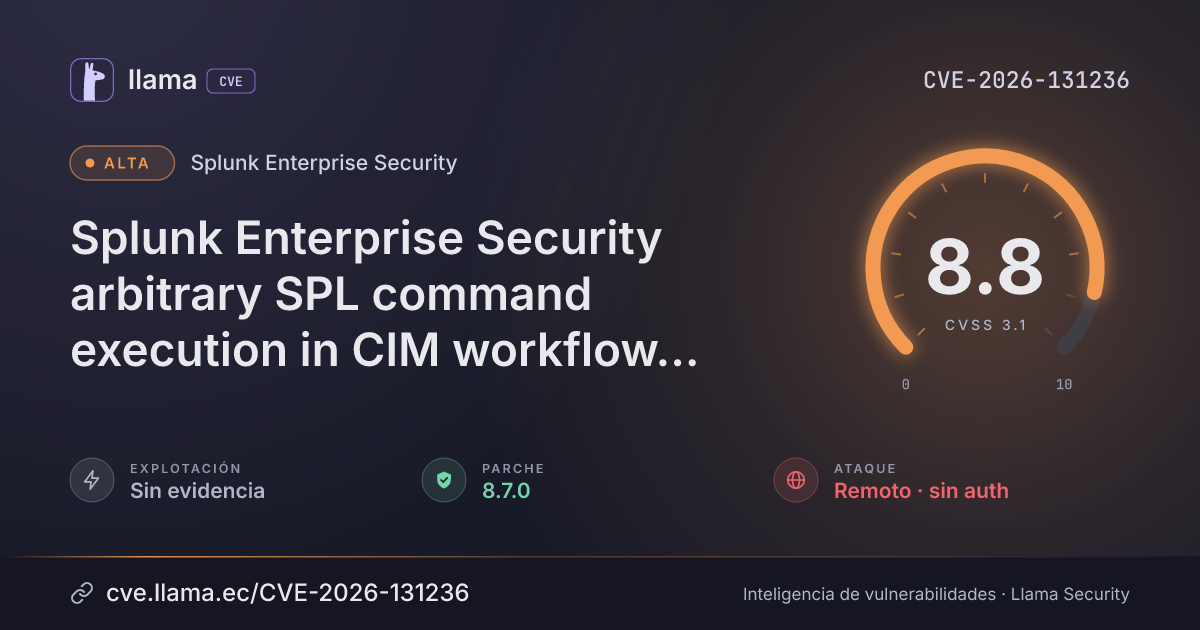
ExplotaciónSin evidenciaSSVC: ninguna · no figura en CISA KEV
Exploits públicos0Ninguno conocido
Parche1 versión8.7.0
Exposición1 dDesde la divulgación, 19 nov 2026, 2:56 p. m.
Detección9 minDesde la divulgación hasta su ingreso al índice
Decisión SSVCSeguir de cerca
Monitorear y programar la remediación
Sin explotación conocida, no automatizable e impacto técnico total. Hay versiones corregidas disponibles.
Anótala en tu libreta de pendientes serios.Si el fabricante actualiza el aviso, vuelve a mirar.
Timeline
Ciclo de vida de la vulnerabilidad
Hoy
Divulgación
Publicada
Evaluación SSVC
Modificada
Explotación
Remediación
Monitoreo
Detectada +1
Fuente: ENISA EUVD
Verificada
02:56 p. m.
03:05 p. m.
07:00 p. m.
12:01 p. m.
11:55 p. m.
12:04 a. m.
11:26 a. m.
02:56 p. m.
02:03 a. m.
01:11 p. m.
12:18 a. m.
11:26 a. m.
Fecha
Fase
Evento
Detalle
Divulgación
Publicada
CVE-2026-131236 divulgada · CVSS 8.8 (CNA)
Monitoreo
Detectada
Ingresó al índice
Monitoreo
Fuente: NIST NVD
Registro visto por primera vez en NIST NVD
Divulgación
Evaluación SSVC
CISA-ADP · explotación ninguna
Monitoreo
Fuente: ENISA EUVD
Registro visto por primera vez en ENISA EUVD
Divulgación
Modificada
Última actualización del registro
Monitoreo
Verificada
Última verificación contra las fuentes
Resumen
In Splunk Enterprise Security versions below 8.7.0, an unauthenticated user who can influence indexed event data could store attacker-controlled values in event fields. If another authenticated user who reviews the event selects the View Adaptive Response Invocations or View Adaptive Response Results workflow action from Event Actions, Splunk Enterprise Security could run attacker-controlled Search Processing Language (SPL) commands using the permissions of the user who selects the action. The unauthenticated user could then access or modify sensitive data and disrupt services available to the user who selects the action.
The vulnerability is possible because the affected Common Information Model workflow actions insert the orig_sid and orig_rid event-field values directly into searches without safely validating or quoting the values.
For more information see About workflow actions in Splunk Web (https://help.splunk.com/en/splunk-enterprise/manage-knowledge-objects/knowledge-management-manual/10.2/workflow-actions/about-workflow-actions-in-splunk-web) in the Splunk documentation.
Only affects Splunk Enterprise Security below 8.7.0 on instances with Splunk Web turned on, when a user selects a View Adaptive Response workflow action on an attacker-supplied event. Fixed in 8.7.0.
¿Qué significa?An attacker can plant SPL search commands in event values. When another authenticated user who reviews that event selects the View Adaptive Response Invocations or View Adaptive Response Results workflow action, those commands run with that user's permissions, which can expose or change sensitive data and disrupt services.
¿Quién está afectado?Splunk Enterprise Security versions below 8.7.0 are affected, but only on instances with Splunk Web turned on. Check the installed version of Splunk Enterprise Security in the app list, and check whether Splunk Web is enabled in your deployment settings.
Contexto
Condiciones y alcance
Condiciones necesarias para que el fallo sea explotable
Splunk Web turned on“The vulnerability affects instances with Splunk Web turned on.”
03
A victim user selects the View Adaptive Response Invocations or View Adaptive Response Results workflow action from Event Actions on an event containing the attacker's values“If another authenticated user who reviews the event selects the View Adaptive Response Invocations or View Adaptive Response Results workflow action from Event Actions”
¿Quién debe revisar?Teams running Splunk Enterprise Security below 8.7.0 with Splunk Web turned on, including analysts who review events and use Event Actions workflow actions
MitigaciónTurn off Splunk Web
Vector CVSS 3.1
Desglose de métricas
Opción resaltada = valor del vector · izquierda = peor caso · CNA
Vector de ataqueAV:N
RedAdyacenteLocalFísica
ComplejidadAC:L
BajaAlta
PrivilegiosPR:N
NingunoBajosAltos
InteracciónUI:R
NingunaRequerida
AlcanceS:U
CambiadoSin cambio
ConfidencialidadC:H
AltoBajoNinguno
IntegridadI:H
AltoBajoNinguno
DisponibilidadA:H
AltoBajoNinguno
Score de explotaciónQué tan fácil y probable es que la exploten
8.3/ 10Alto
Vector 8.3 (muy fácil) · sin evidencia de explotación.
Versiones
Rangos afectados
AfectadaCorregida
Splunk Enterprise Security< 8.7.0
8.7.0
Remediación
Estado del parche por paquete
Paquete / producto
Estado
Corregida en
Desde divulgación
Última versión
Splunk Enterprise Security
Corregida
8.7.0
—
—
Versiones corregidas8.7.0
Explotación
Arsenal público
Sin exploits, módulos ni PoC públicos conocidos a la fecha de verificación.
Registro
EscenarioGENERALcisco
MitigaciónThe vulnerability affects instances with Splunk Web turned on. Turning Splunk Web off is a possible workaround.
See [Disable unnecessary Splunk Enterprise components](https://help.splunk.com/en/splunk-enterprise/administer/manage-users-and-security/10.6/install-splunk-enterprise-securely/disable-unnecessary-splunk-enterprise-components) and the [web.conf](https://help.splunk.com/en/splunk-enterprise/administer/admin-manual/10.6/configuration-file-reference/10.6.0-configuration-file-reference/web.conf) configuration specification file for more information on turning off Splunk Web.cisco
solutionUpgrade Splunk Enterprise Security and Splunk App for PCI Compliance to version 8.7.0 or higher.cisco
Usamos cookies propias estrictamente necesarias para que el sitio funcione y sea seguro. Con tu permiso, también usamos almacenamiento local para recordar tus preferencias y medir el uso del sitio de forma agregada. Puedes aceptar, rechazar o configurar cada categoría, y cambiar tu decisión cuando quieras desde el enlace “Preferencias de cookies” del pie de página. Más información
Preferencias de cookies
Elige qué permites
Solo usamos tecnologías propias de este dominio. Sin publicidad ni rastreadores de terceros. Detalle en la Política de cookies.